THE TRIUNFANTE BY EL MAGO

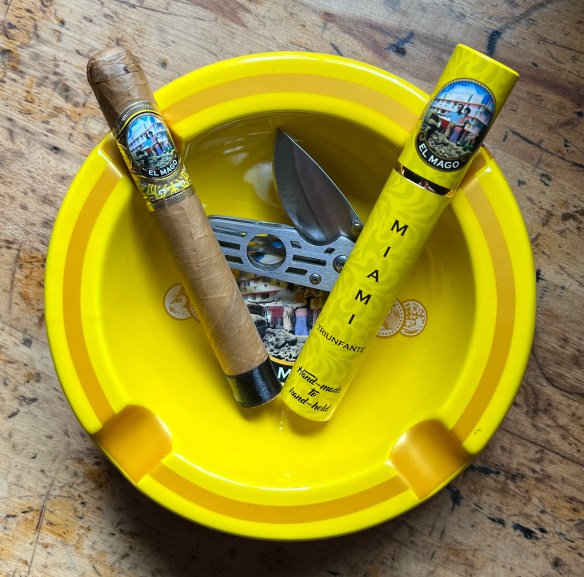
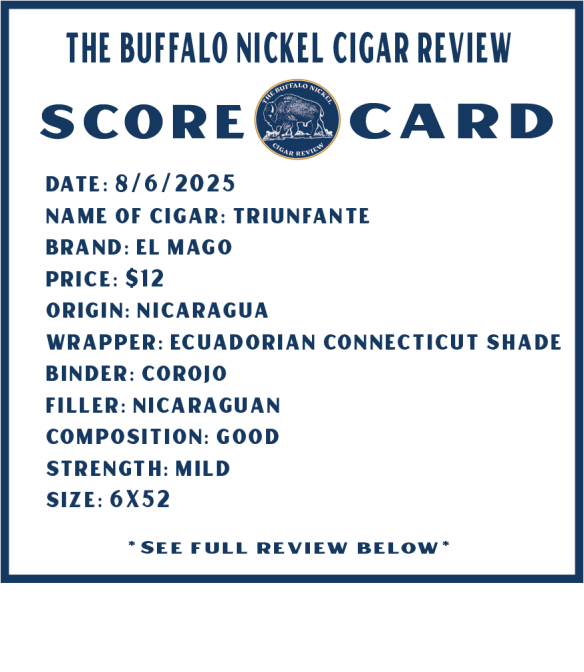
Alright, let’s lay it all out for the Triunfante from El Mago. You crack open that box, and right away, you know you’re not dealing with some run-of-the-mill stick. We’re talking Nicaraguan guts bound up in Corojo, and wrapped in Ecuadorian Connecticut Shade. Good composition, mild strength, 6×52 – perfection.

Once lit, with that first third, you’re hit with what I can only describe as the perfect coffee pairing cigar. This is not one of those just “goes with coffee”; this is coffee’s best friend. The smoke? Thick and creamy, like a well-pulled espresso with a dollop of fresh cream. Then, a whisper of cinnamon and spice rolls in, just enough to wake up your palate, not punch it. And that sweetness – it’s there, but it’s so subtle, so understated, you almost have to hunt for it, and then it just lingers, a perfect counterpoint to the richer notes. It’s a fantastic introduction, setting a high bar from the very first puff.

Moving into that second third, here’s the kicker: it was much of the same. And when I say much of the same, I mean that in the best possible way. No wild left turns, no sudden bursts of unexpected flavors that throw you off track. It held its ground, delivering that consistent, enjoyable profile. It’s like a good hunting dog – it sticks to the scent, unwavering in its pursuit of flavor. You get that same creamy smoke, that delightful cinnamon whisper, and that elusive sweetness, all holding true.

And then, you roll into the final third, and guess what? Even more of it. This isn’t a cigar that falls apart on you at the end, getting harsh or losing its charm. It just doubles down on what it does best, reinforcing every positive impression from the previous thirds. That, my friends, is the mark of a truly great, consistent cigar. It burns clean, draws true, and finishes strong, leaving you entirely satisfied.

So, who is this cigar for? It’s simple. This is your go-to for that first cigar of the day with your coffee – the perfect wake-up call that doesn’t punch you in the face. If you’re looking to introduce someone to the cigar world, this Triunfante from El Mago is an absolute winner. It’s mild, approachable, and flavorful without being overwhelming, easing them into the experience. And for you seasoned smokers out there who aren’t looking for a heavy hitter, something that demands your full attention like a grizzly bear, this is your play. It’s a reliable, flavorful stick that just delivers.

El Mago? They’re clearly a company on the rise, doing some truly great things in the cigar world. They’re putting out quality, consistent smokes like this Triunfante, demonstrating a clear understanding of what makes a truly enjoyable cigar. And believe me, I’m looking forward to getting my hands on more of their stuff and telling you all about it. This is a good one, folks. A real good one.
UNDERCROWN 10 BY DREW ESTATES REVIEW

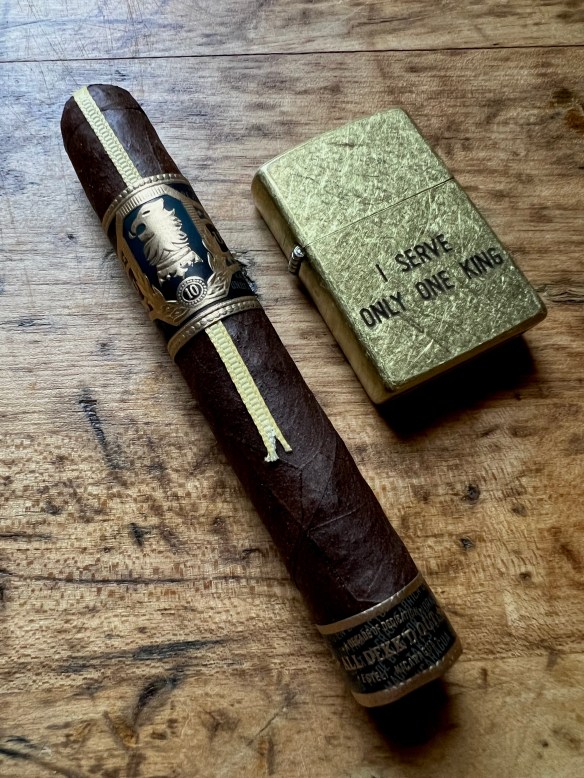
On the Drew Estate Undercrown 10 Robusto: A Decade’s Worth of Smoke

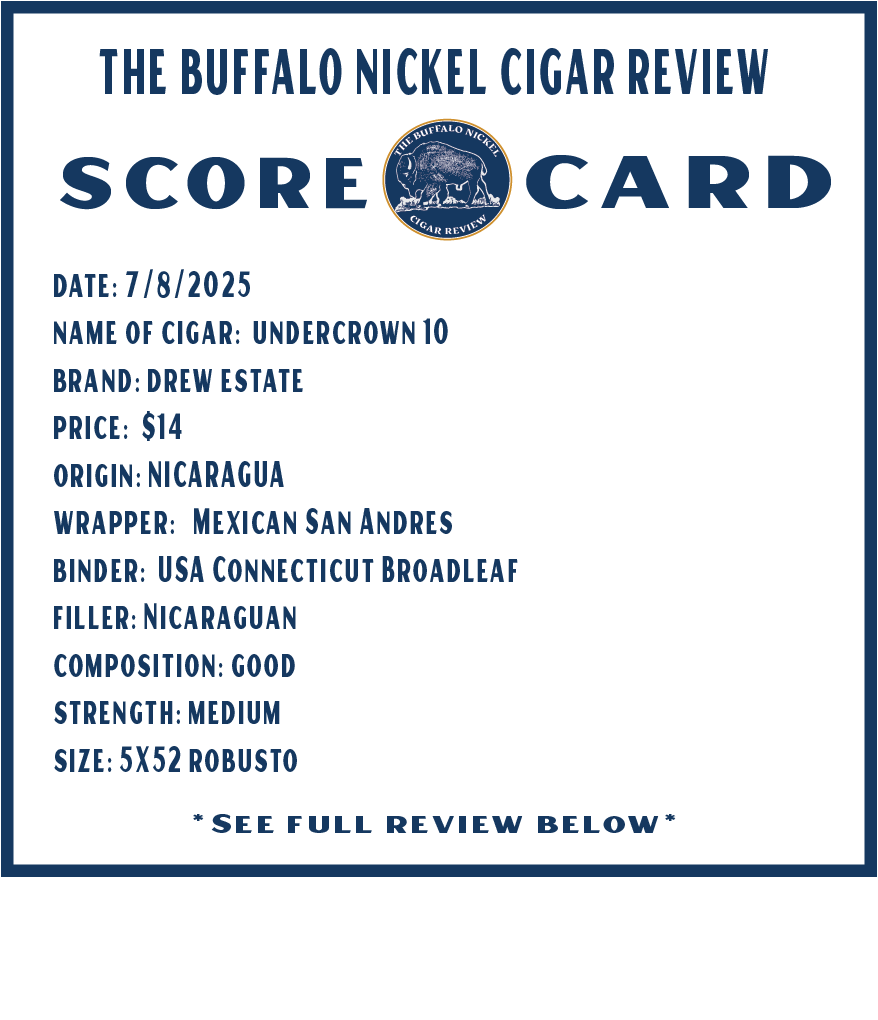
You pick up this Undercrown 10 Robusto, a tidy 5×52, and right away you know it’s got some story behind it. It’s Drew Estate’s nod to ten years in the game with the Undercrown line, rolled down in La Gran Fabrica in Nicaragua. They built this one right: a Mexican San Andrés wrapper, a stout USA Connecticut Broadleaf binder, and Nicaraguan filler. It’s a blend that promises something layered.

Light it up, and the first third comes at you with a smooth, welcoming handshake. You get those clear, unmistakable notes of cocoa and espresso, solid and present, and right there with it, a slight, gentle spice that just touches the palate. It’s not a punch in the face; it’s more like a subtle invitation. This initial profile sets a good, honest tone for what’s to come.

Move into the second third, and those core cocoa and espresso flavors hold their ground, acting like the bedrock of the experience. But things start to shift, subtly. You’ll notice a slight mineral note creeping in—a clean, almost flinty edge—and then a distinct earthy quality joins the party. It’s not a drastic change, but it’s enough to keep you engaged, to make you pay attention to how the flavors are playing off each other. It shows they knew what they were doing with this blend, letting it evolve without getting muddled.

By the final third, the whole thing just builds. Those cocoa and espresso notes, now fully developed, come on with a bit more richness and assertiveness. The mineral and earthy tones from the middle section also deepen, fitting right in with the main profile. What’s key here is that this increased intensity never gets harsh. It keeps that enjoyable, refined character from start to finish, wrapping things up in a consistently satisfying way.

So, the Drew Estate Undercrown 10 Robusto delivers a well-thought-out smoke. It starts with a clear, approachable mix of cocoa, espresso, and that hint of spice, then brings in those earthy and mineral layers, and finishes strong but still smooth. If you appreciate a cigar that tells a consistent, evolving story and stands on solid ground, this one’s definitely worth your time.

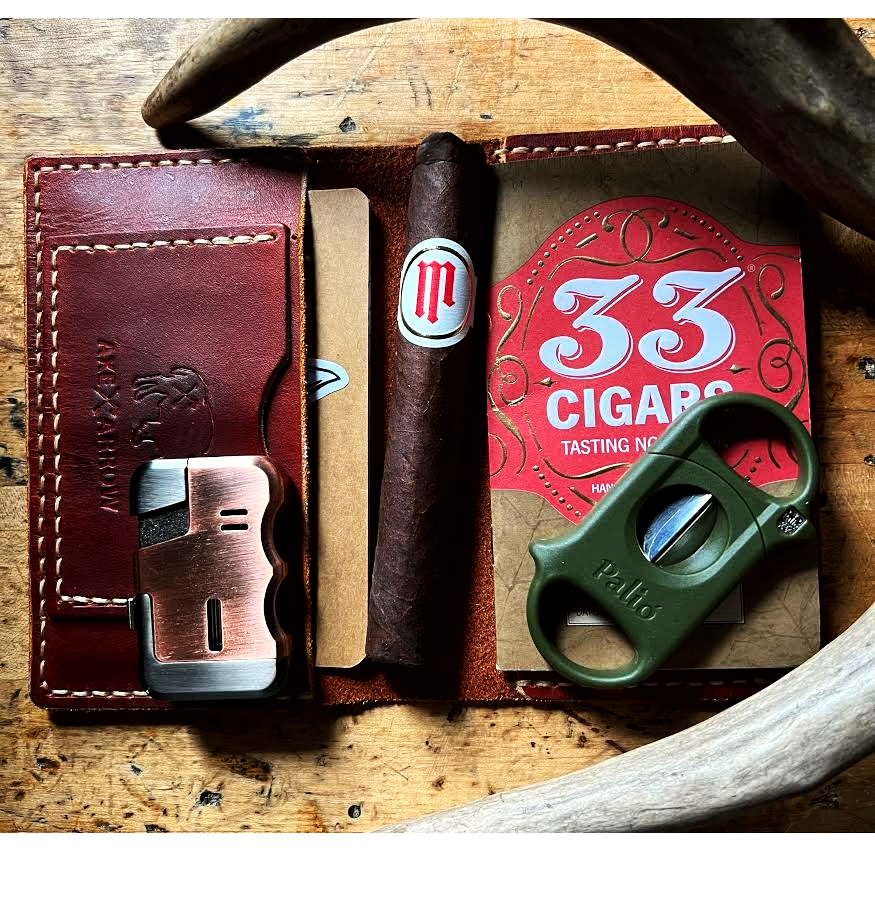
MIL DIAS MADURO BY CROWNED HEADS

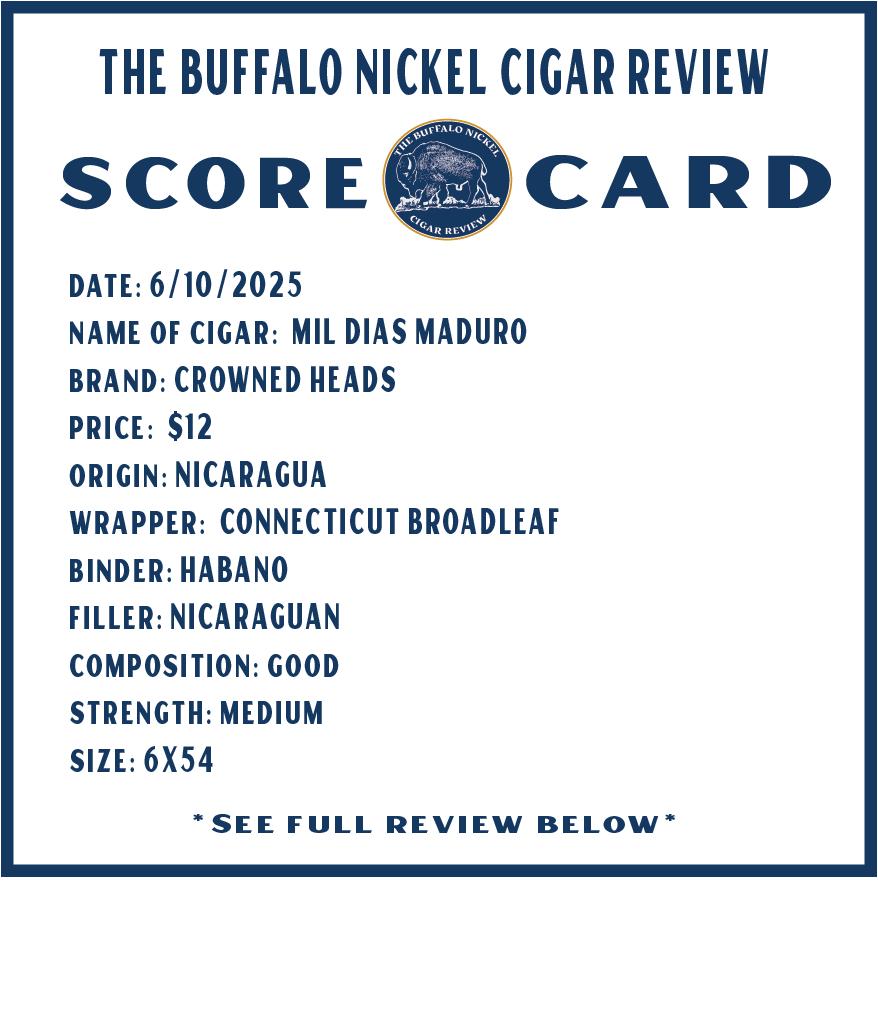
Alright, let’s talk about something I appreciate when the day winds down, something that grounds you a bit: a good cigar the Crowned Heads Mil Días Maduro. Now, this isn’t just any stick; it’s a 6×54 medium-strength robusto, hailing from Nicaragua. You can tell right away it’s built solid – a Connecticut Broadleaf wrapper, a Habano binder, and that Nicaraguan filler all coming together. It feels right in the hand.

First Light: The Initial Read

The moment the flame kissed the foot, and I took that first draw, this Mil Días Maduro didn’t waste any time introducing itself. It wasn’t subtle, but it wasn’t overpowering either. What hit me first was this distinct charred oak. Not burnt, but like wood that’s been in a good, slow fire, giving off a deep, earthy scent. Then, right behind it, a real pleasant molasses sweetness rolled in. It smoothed things out, gave it a bit of a comforting depth. And just as I was settling into those, there was this sharp spike of pepper. Not an aggressive kick, but a lively snap that made you pay attention. The smoke itself? It was like a thick fog, unbelievably creamy, just coating everything.

Into the Heart: Mid-Journey Impressions

As I worked my way through the second third, the cigar really started to open up, showing more of its character. That initial char and pepper eased back, not disappearing entirely, but becoming more of a quiet hum in the background. What took over was this rich, full profile of toasted nuts – a warm, inviting flavor, followed by the unmistakable depth of dark chocolate. It was like unwrapping a really good candy bar, but in smoke form. The sweet tobacco from the start was still there, a constant companion, holding all these new elements together. And yeah, those ghosts of charred oak and cedar would drift back in now and then, a nice little reminder of where this thing came from. The creaminess of the smoke, it just kept on delivering.

The Finish: Bringing it Home

By the time I got to the final third, this Mil Días Maduro was just hitting its stride, bringing everything together for a strong finish. Those toasted nut and dark chocolate notes were still prominent, blending seamlessly with the underlying sweetness. It wasn’t a cigar that changed drastically at the end; instead, it refined the journey. It carried those initial impressions and developed them into a truly satisfying blend. It was a consistent, well-composed experience right down to the last puff, leaving a clear sense of a job well done.

My Takeaway

So, what’s the verdict on the Crowned Heads Mil Días Maduro? It’s a well-built cigar, no question. It delivers a rich, evolving flavor profile that keeps you engaged without overwhelming you. If you’re looking for something with that distinct charred oak, a solid sweetness, a bit of peppery kick, and then evolves into those toasted nut and dark chocolate notes, you’d do well to pick one of these up. It’s a rewarding smoke, from the first draw to the last.

OH NO! I HAVE NEVER HAD A CIGAR IN MY LIFE, WHAT DO I DO?

Alright, don’t panic. Cigars can be confusing, I get it. I started a little over a year ago and now I am a certified cigar sommelier. But… this is my job, you just want to get by with your buddies so you don’t look stupid. It’s all okay, I will get you to the point of comfort so you can actually enjoy this excursion instead of feeling like you have to ace a final.

So, you’ve decided it’s time to grasp the fundamentals of a good cigar. Maybe you’ve got a new golf buddy who savors a smoke on the back nine, or your best friend is getting married and all the groomsmen are sharing a cigar experience. When I started out, I couldn’t tell a foot from an elbow. I had no idea how to light a cigar, that flavor profiles were even a thing, the shapes, sizes, wrappers… what??? It’s a lot of information, I know, but let’s simplify it so you don’t embarrass the crap out of yourself. Trust me, nobody wants to be “that guy” fumbling with a stick when everyone else is enjoying a quiet moment. It’s easy for the world of cigars to feel a bit overwhelming, even expensive, but there’s no need to spend hundreds of dollars right out of the gate. We’re just here to cover some basics. Don’t feel out of your depth; every master of a craft started as an apprentice. I’m here to lay out the groundwork, ensuring your maiden voyage into the world of cigars is marked by confidence, not by fumbling.


The Cigar’s Blueprint: Anatomy of the Stick

Before you even think about putting flame to leaf, understanding how a cigar is put together is paramount. This isn’t some haphazard bundle of dried tobacco; it’s a precisely engineered piece of work, a real testament to skilled hands. Think of it like a well-built tool – each part has a specific job.

  • Foot: This is the end you’ll light, usually open and ready for business.
  • Head: The opposite end, the one that goes in your mouth. It’s almost always capped and needs a clean cut.
  • Cap: A small, carefully applied piece of leaf that seals the head, holding the wrapper tight. Mess this up, and your cigar will unravel faster than a bad fishing knot.
  • Wrapper: The cigar’s outermost layer. Often the prettiest leaf, and usually the most expensive, it plays a big role in the cigar’s main flavor and how it smells. It’s the face of the operation.
  • Binder: Tucked just under the wrapper, this tougher leaf holds the filler tobacco together. It’s crucial for a steady, even burn. This is the unsung hero, keeping the whole thing from falling apart.
  • Filler: The very heart of the cigar, made up of different tobacco leaves – sometimes from all over the globe. These leaves collectively decide the cigar’s strength, its complex taste, and its overall character. This is where the true essence, the real flavor, makes its home.

Selecting Your First Charge: Exercise Prudence

This rule stands firm. Just like you wouldn’t start learning about spirits by chugging a barrel-strength whiskey, don’t jump straight into a full-bodied, heavy cigar. Your palate needs to ease into it. Start sensible, like picking the right caliber for your first hunting rifle.

  • Seek out mild to medium-bodied selections: Good starting points include the Macanudo Cafe, an Arturo Fuente Hemingway Short Story, or an Ashton Classic. These offer a balanced, easygoing smoke, without knocking you flat. You don’t want your first puff to feel like you just swallowed a mouthful of campfire smoke.
  • Consider a ‘Flavored’ Introduction: Some beginners find an easier path in with a quality infused cigar. We’re not talking about those sickly sweet things you find at a gas station, but reputable brands that infuse their tobacco with subtle, often natural, sweetness or other pleasing aromas. These can be a gentle bridge, helping someone new to tobacco find some initial enjoyment before they learn to appreciate the pure, unadulterated flavor of traditional cigars. A solid recommendation here is the Drew Estate Deadwood Series, like the Fat Bottom Betty or Sweet Jane, known for their unique, sweet notes without being overly artificial. Think of them as training wheels for your taste buds. It’s a stepping stone, not the end of the trail.
  • A word of caution: This might be your pre-excursion cigar. Among truly serious cigar users, stick with a straight-up mild-to-medium bodied suggestion like those mentioned earlier. Why, you ask? To save yourself some embarrassment. Seasoned cigar smokers might try to pull your man card or give you a hard time if your cigar smells like a bowl of Fruity Pebbles. To them, those are often seen as toys for kids, not serious smokes for grown folks around the fire.
  • Heed the vitola (size): Smaller cigars, like a Robusto or a Corona, are a smart move. They burn quicker, giving you a good introduction without having to commit to a long smoke that might wear you out. You don’t want to be stuck with something you’re not enjoying for an hour.
  • Consult the purveyor: When you’re in a respectable tobacconist shop or a dedicated cigar lounge, tell them you’re just starting out. Ask for a mild, beginner-friendly cigar, and don’t hesitate to mention if you’re interested in a quality infused option, like something from the Deadwood Series. These folks are like seasoned guides; their knowledge is worth its weight in gold.

The Decisive Cut: Mastering the Blade

You absolutely cannot, under any circumstance, just bite off the end – that’s a rookie’s blunder, a real rookie move. A precise cut is essential for a clean draw and an even burn. Treat your cutter with the respect you’d give a sharp camp knife.

  • Common Cutting Implements:
    • Guillotine (Straight Cut): This is the most common and straightforward tool. It gives you a clean, decisive chop. Simple, effective, no fuss.
    • Punch Cutter: This tool makes a small, round hole in the cap. Some folks prefer it for a slightly tighter draw. Like drilling a small pilot hole.
    • V-Cutter (Cat’s Eye): This one makes a distinct “V”-shaped notch in the cap. For those who like a bit of finesse.
  • The Unbreakable Rule: Always cut above the cap line. Your goal is to just snip enough of the cap to create an open channel for the draw, without messing up the wrapper. A common mistake is cutting too deep. If you go too far, that wrapper will unravel faster than a bad rope in a white-water rapids, and you’ll be left with a sad, floppy mess of tobacco. Aim for one swift, confident action.

Ignition: The Ritual of the Flame

Lighting a cigar is a distinct skill, not like haphazardly flicking a lighter for a cigarette. It’s a deliberate act to make sure you get a broad, even light. Take your time with this, like you’re building a good fire in a chilly camp.

  • Preferred Fire Starters:
    • Butane Torch Lighter: This is the top choice. It throws a clean, odorless flame, free from any gunk. It’s your dependable workhorse.
    • Wooden Matches (unwaxed): An old-school method, a bit more challenging. Let the sulfur burn off completely before you even think about putting flame to tobacco. It works, if you’ve got the patience of a trapper.
    • Cedar Spills: These are thin, long strips of cedar. They burn slow and steady, giving off a subtle, pleasant aroma. For the purists, or if you’re feeling a bit fancy.
  • The Process:
    1. Toast the Foot: Hold the cigar’s foot just above the flame (never directly in it) and slowly rotate it until the entire surface gets a nice, even char and starts to glow. You’re not setting it ablaze, you’re preparing it, like searing a good piece of meat.
    2. Apply Flame While Drawing: Once it’s properly toasted, bring the flame to the foot and start taking gentle, measured draws, keeping that cigar rotating. Don’t take aggressive, rapid puffs; methodical patience gets you the best results. Think gentle sips, not trying to suck the smoke out with a vacuum cleaner.
    3. Verify the Burn: Check out the cigar’s foot. You’re looking for a consistent, glowing cherry all the way around. If a spot isn’t lit, gently put the flame back to that area. We’re going for an even burn here, not a lopsided hot dog on a stick.

The Smoke: Savoring the Journey

  • Never Inhale: This is the golden rule, and I can’t stress it enough. Cigar smoke is meant to be savored on your palate, not pulled into your lungs. Unless you want to cough like a wild goose caught in a thunderstorm, keep that smoke out of your lungs. Draw the smoke into your mouth, let its flavors linger, and then slowly exhale it.
  • Puff with Purpose: Treat this experience like you’re enjoying a slow-cooked meal after a long day in the field. Avoid puffing constantly. The sweet spot is usually one or two deliberate puffs every 30-60 seconds. Puffing too fast will inevitably overheat the cigar, making it taste harsh and bitter. Don’t puff like a steam engine; you’ll scorch the tobacco and ruin the flavor quicker than a bear raiding a picnic basket.
  • Discern the Evolution: Cigars naturally change in flavor as they burn down. Pay attention to the subtle notes that emerge – maybe you’ll pick up on cedar, strong coffee, a hint of nuts, or a developing spice. It’s a journey of taste, not a sprint to the finish line.
  • Respect the Ash: Don’t knock the ash off too soon. A longer ash actually helps insulate the cigar, keeping its temperature steady and promoting a cooler, more even burn. Let it build up to a good length, perhaps an inch or more, before gently rolling it into an ashtray. Think of that ash as a temporary trophy; let it grow, then let it go.
  • Knowing When to Conclude: When the cigar starts getting uncomfortably warm to the touch, or its flavor turns harsh, or simply when you stop enjoying it, that’s your cue to set it down. There’s no law saying you have to smoke it down to the very nub. Don’t be a hero; when it stops being good, it stops.

A Word on Decorum and Preservation

  • Ash with Responsibility: Always use a proper ashtray. Don’t be a slob; nobody likes rogue ash on the patio.
  • Relighting Protocol: While you can relight a cigar if it goes out, try to avoid doing so after a long stretch of time. The flavors trapped inside will be ruined. If it’s been sitting cold for ten minutes or more, it’s likely done for.
  • The Humidor: If you plan on buying more than just a handful of cigars, investing in a proper humidor is essential for keeping them fresh over the long haul. But for getting started, your tobacconist should give you a good bag for transport. Ask them if you can also pick up a Boveda pack for a small fee. This little, vital packet will keep the humidity just right, giving your cigars months of protection while you figure out if this pursuit is truly for you. It’s an inexpensive bridge, letting you test the waters before you sink a chunk of cash into a dedicated humidor. For now, let’s just get you squared away.

Embarking on your cigar journey is a commendable step into a world of deliberate relaxation, refined tastes, and good company. With these fundamental principles locked down, you’re now ready to approach your first cigar with unwavering confidence and, indeed, genuine satisfaction.

.